
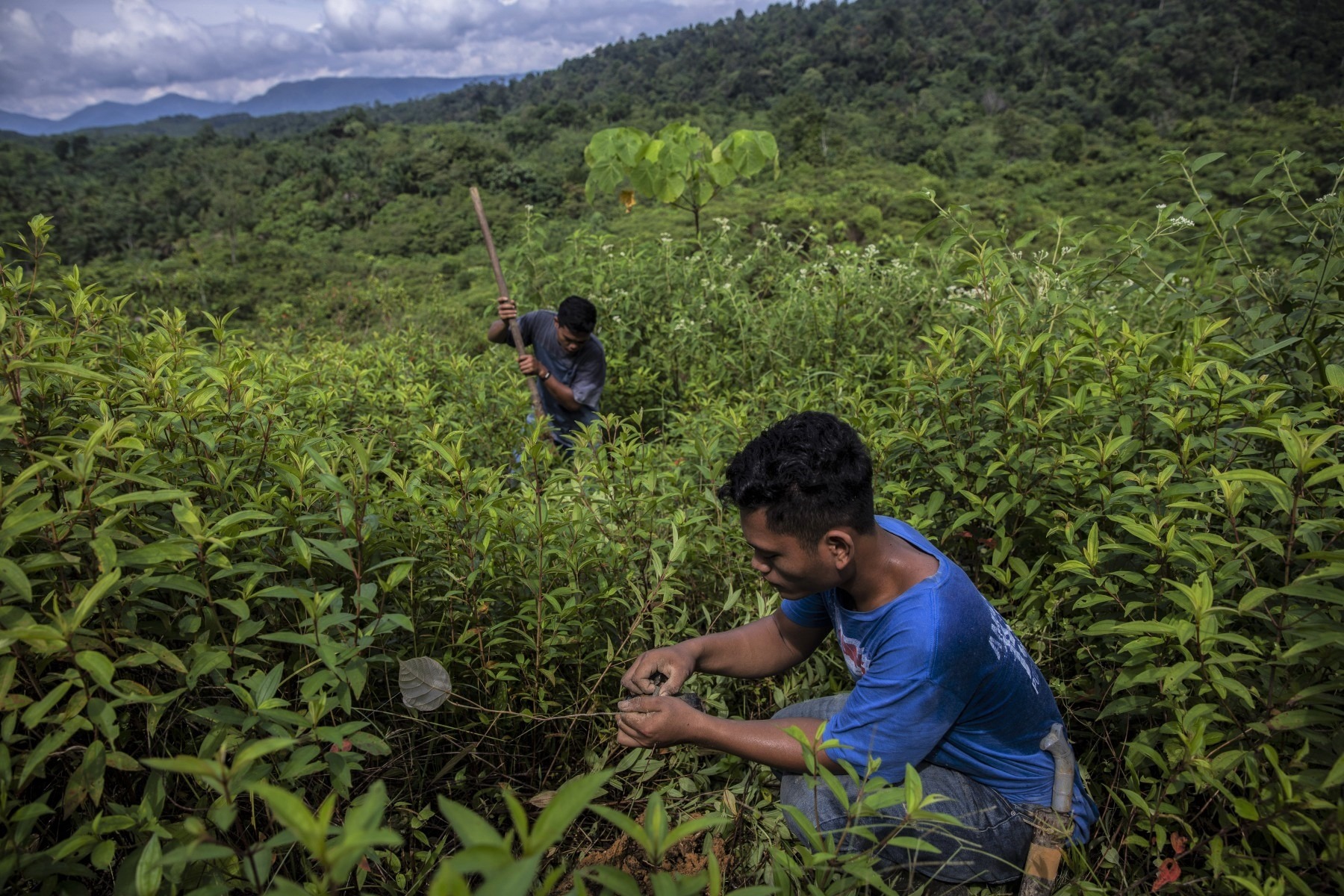
“In the forest, the first thing you notice is the sound,” Morten explains. “Birdsong, the noise of insects: there is life everywhere. I’ve stood in commercial plantations and it was silent… no real sounds of animals, or people. It gave me a very uneasy feeling.”
Morten Rossé leads Systemiq’s natural solutions team, which collaborates with more than 70 businesses in some of the most valuable and vulnerable environments on Earth. These different business models all have one thing in common: they’re designed to protect diverse ecosystems, managed for people and planet. Monocultures are rarely, if ever, the answer.
Systemiq has just finalised its second investment in SOBI – a social business company in Indonesia. The country has lost huge areas of its tropical forest in just a few decades: to farming clearance, to demand for wood pulp and paper, and to the exploitative production of commodities such as palm oil. SOBI’s forest management offers a different approach. It helps to protect endangered forest and provide long-term livelihoods, by producing sustainable timber products.
Building trust with farmers is crucial. SOBI provides farmers access to the fairly priced timber market, including the necessary permits and certifications, and connects communities with environmentally minded market players. It also provides IT infrastructure and training, and raises and manages capital to further develop the community-based enterprises. As Morten explains, it’s a natural fit with Systemiq, which already partners with companies, NGOs, indigenous communities and cooperatives around the world’s tropical belt.
In the first year of the Systemiq and SOBI partnership, the cooperatives’ incomes doubled. SOBI already works with over 3,000 farmers, and plans to double that by the end of this year, by which time its projects will manage trees worth over £5.7 million. Many are destined for the furniture and flooring industries in North America and Europe: an alternative source of timber for manufacturers that want to make a real claim to sustainability.
Finding the right species mix means weighing up demand potential and economic return: for example, growing albizzia – a frond-leaved tree that’s ready for felling in seven years – among high-value, slower-maturing hardwoods. At two other sites, communities will plant gmelina, much prized as a joinery wood, and white jabon, which provides a fine-grained, versatile timber. And as the farmers wait for cashew bushes to mature, annuals like ginger and bird’s-eye chillies make a valuable cash crop.
Ultimately, SOBI aims to extend its services down the value chain – into primary processing of timber – but also upstream, by planting under-used land for agroforestry purposes. Not least as a way of driving one vital metric of the business model: carbon sequestration.
As of this year, SOBI’s commercial trees stored almost 20,000 tons of carbon with substantially higher amount of carbon stored in the protected surrounding forest areas. Ultimately, the business model is a form of climate action. Making these landscapes economically viable is a way of containing greenhouse gases, slowing the loss of biodiversity, and helping to maintain the planet’s vital functions, like pollination and rainfall. Investing in them could yet stop these and other environments from falling silent.

