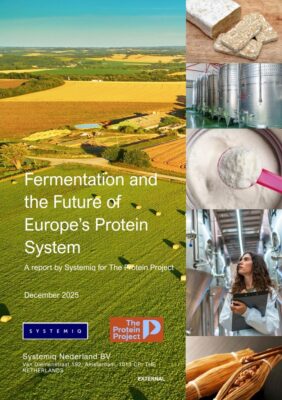
Fermentation is one of humanity’s oldest food technologies. Growing interest in classical, biomass and precision fermentation is creating new opportunities for these technologies to complement existing protein sources and strengthen the resilience of Europe’s food system.
This report examines emerging evidence on how different forms of fermentation may support Europe’s environmental, agricultural and public health objectives. Drawing on environmental modelling and market analysis, the report shows that fermentation has the potential to greatly reduce the environmental footprint of the food sector. In a medium-adoption scenario by 2040, fermentation could reduce greenhouse-gas emissions by 20 million tonnes of CO₂e, cut water use by 1,500 million m³, and free up 11 million hectares of land, in- and outside of the EU combined. Real-life case studies illustrate the socio-economic role of fermentation, and how it can create new opportunities for farmers, as well as diversify protein choices for consumers. Taken together, these findings suggest that fermentation could become an important pillar of a more diverse, resilient and sustainable European protein future.