Corporates and households are central to the transition, yet their role is often overlooked. As real economy actors they build, own and operate assets, shape demand and mobilise domestic resources that are central critical to financing the transition in emerging markets and developing economies (EMDEs).
The opportunity for their contribution is significant. By 2035, corporates and households could contribute around $770 billion annually – more than half of the private climate finance needed in EMDEs, with the majority coming from domestic sources.
Yet too often, their role in climate finance is treated as secondary. This overlooks both the scale of the opportunity and the importance of building transitions that are rooted in domestic markets and local demand.
Unlocking this capital is critical to closing the climate finance gap and anchoring more resilient, locally driven transitions.
Bringing the real economy into focus
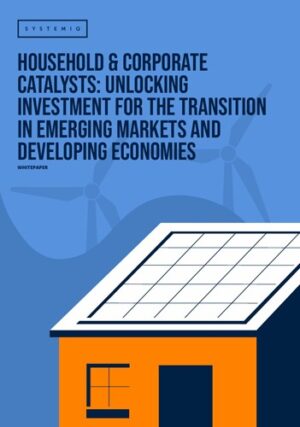
This Systemiq whitepaper brings these actors into focus. It explores how corporates and households can act as catalysts of climate investment, and sets out practical pathways to unlock their potential. These pathways range from strengthening corporate project origination and long-term investment, to enabling households to participate as investors, consumers and savers in the transition.
The paper reframes corporates and households not as peripheral actors, but as central to how investment is mobilised in the real economy.
Realising this potential will depend on the right enabling conditions. These include credible policy signals, accessible and tailored financial products, deeper domestic financial systems, and more effective use of catalytic and concessional finance.
Together, these factors can help unlock investment at scale and support more durable, locally driven transitions.
This paper provides a starting point. It lays out key levers for action and helps shape a broader conversation on how to mobilise the full power of the real economy in the transition.