
Navigating a new era of climate disruption
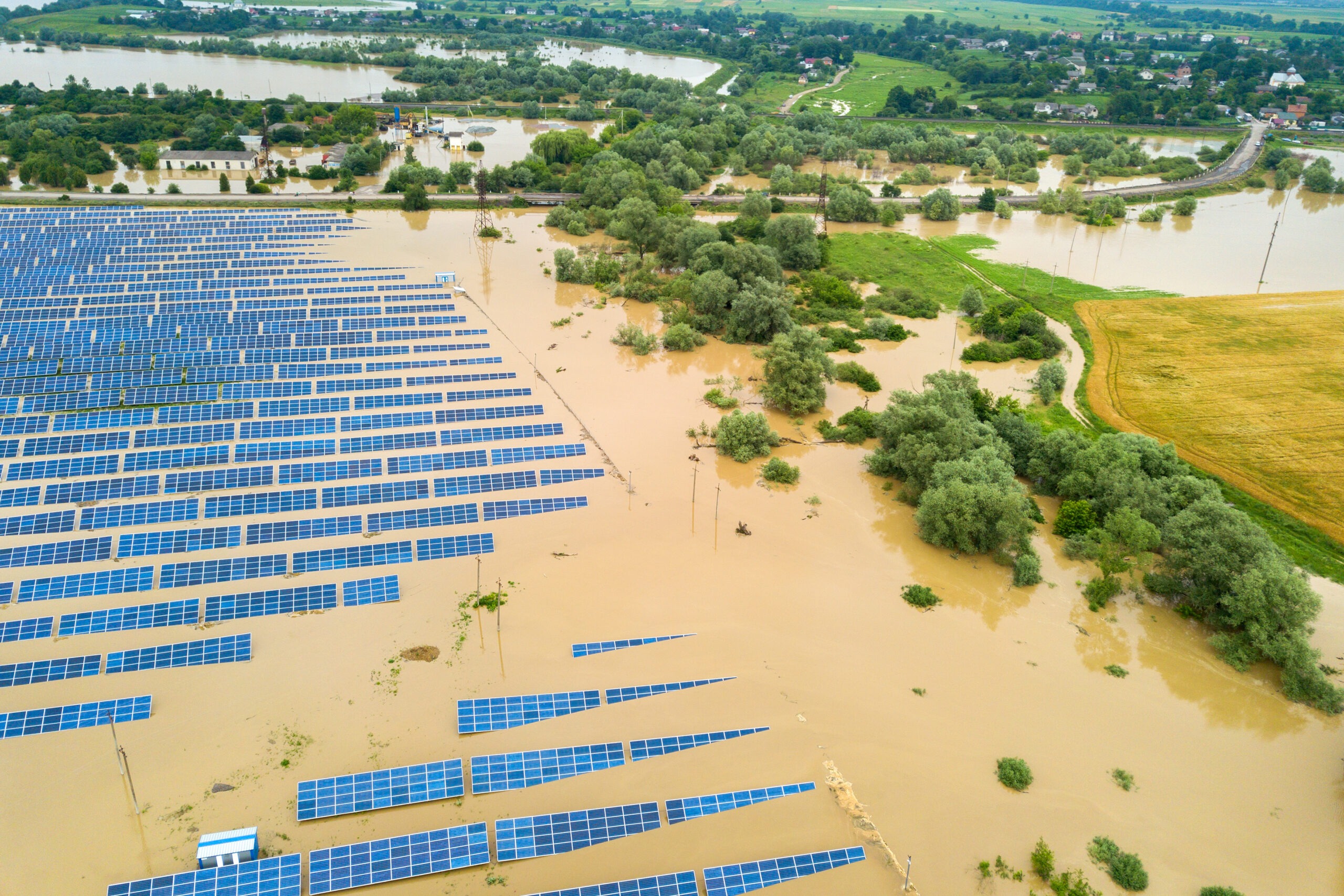
Tariffs, geopolitical fragmentation, supply chain upheaval, cyber threats: corporate risk management is already stretched to its limits. What many companies have missed is how physical climate risk amplifies every other disruption and makes each harder to absorb. It is both its own distinct threat and a threat multiplier. Addressing physical climate risk can create real enterprise value, but requires a strategic approach championed by senior leaders.
Drawing on interviews, roundtables, and dialogues with more than 40 organizations, Systemiq and Center for Climate and Energy Solutions (C2ES), found a strikingly consistent pattern: companies know the risks are growing, but most are still responding event by event instead of building the capabilities needed to absorb compound shocks, capabilities that will become a source of competitive advantage for early movers. Climate Resilience as Strategy assesses where corporate resilience stands today, maps the available guidance, and offers four practical ideas for scaling action.
|
$1.2 trillion
in projected annual financial impact to companies by 2050 without action
|
1.7x times
higher total returns for companies with insignificant climate risk vs. peers with moderate exposure, over the past decade
|
Just 42%
of companies have a dedicated adaptation plan
|
The six-module resilience journey
Across our interviews and dialogues, a consistent picture emerged of what it takes to move from awareness to comprehensive action. We organized it into six modules. Most companies need to build capability across all six to treat resilience as a strategic priority, and together they form the basis of the self-assessment linked below:
- Assess risk. Move from qualitative hazard maps to quantified, decision-ready estimates of downtime, revenue at risk, and capital at risk.
- Integrate into governance and operations. Establish clear ownership and embed resilience into the decisions and routines that shape performance.
- Value and build resilience. Quantify avoided losses and returns so resilience competes for capital as a value-creating capability, not just a cost.
- Finance resilience. Aggregate interventions into a funded, multi-year program rather than episodic spending released after a shock.
- Disclose. Connect reporting to real management decisions, so companies become decision-mature, not just reporting-mature.
- Engage the ecosystem. Partner beyond the fence line with peers, suppliers, utilities, governments, and communities to address shared system risks no company can solve alone.
Where does your organization stand?
Take 15 minutes to answer 24 questions across six modules. Answer honestly about where your company is, not where you aspire to be, and receive a resiliency profile with guidance tailored to your current level.
Four findings that define the challenge
- Corporate resilience efforts remain underdeveloped relative to risk Companies have begun strengthening business continuity, but maturity still lags exposure. Many adaptation plans push implementation far into the future, and only 25% of corporate adaptation measures are genuinely strategic in nature.
- Companies lack the tools to treat resilience as a strategic discipline A key gap is valuation: the ability to quantify avoided losses in ways finance teams trust. Without this, resilience falls down the priority list against nearer-term initiatives, and the mismatch between capital planning cycles and multi-decade physical risk trajectories compounds the problem. The deeper cost is a missed opportunity: treated as a set of incremental risk controls rather than a value-creating capability, resilience never gets credit for the competitive advantage it can build for companies that move early.
- Resilience is not yet embedded at the enterprise level Resilience is often real at the facility level, where teams harden assets and refine response plans, but it breaks down at the enterprise level, where companies must set priorities, allocate capital, and hold standards across portfolios, suppliers, and markets. Ownership is usually fragmented: it tends to sit with sustainability or risk leaders, even though most of the levers live in operations and finance.
- The guidance landscape has foundations, but critical gaps remain Guidance is expanding quickly and is strongest on risk assessment and disclosure. But it remains fragmented and uneven on the elements that convert insight into action: valuing resilience, building financeable pipelines of interventions, and enabling ecosystem collaboration.
What needs to happen next
C2ES and Systemiq see four interlocking priorities for moving corporate resilience from awareness to scaled action. Progress on each will reinforce the others, and each is offered as a starting point for collaborative development, not a finished blueprint.
- Make the guidance landscape navigable The ecosystem of standards, frameworks, and tools is expanding but remains fragmented. Companies need a coherent map of what exists, where guidance is strongest, and how to connect risk assessment to strategic action. A sector-sensitive navigator would reduce duplication and help practitioners find what they need when they need it.
- Establish a shared baseline for what good looks like Without a common reference point, companies cannot benchmark their progress or build credibility with boards and investors. A widely adopted self-assessment framework, building on the prototype above and co-developed with practitioners and refined through use, gives companies a structured way to understand where they stand and what to prioritize.
- Build the financial case for resilience investment Resilience investment fails to compete for capital when it cannot be quantified. A consistent, finance-ready method for connecting risk reduction to avoided losses, operational continuity, and strategic value would strengthen the investment case across sectors and unlock significantly more capital for adaptation.
- Develop sector-specific pathways to action Generic guidance leaves companies uncertain about where to start. Sector pathways, co-developed with industry associations and leading practitioners, translate broad principles into concrete priorities for specific risk profiles, asset types, and value chain structures. They also create the conditions for coordinated action beyond the fence line.
A shared foundation, built together
No single organization can connect this landscape alone. Many of the building blocks already exist; what’s missing is the architecture to link them and fill the gaps: common definitions, connected guidance, and a mechanism to coalesce the best existing resources into a standardized framework. Systemiq and C2ES are committing to convene the companies, investors, standard-setters, and expert organizations needed to build it.
About this work
Climate Resilience as Strategy is a joint white paper co-authored by Systemiq and the Center for Climate and Energy Solutions (C2ES), examining where companies stand on physical climate resilience today and what it will take to move from risk awareness to scaled action.
The findings draw on three strands of research: a desktop scan of the existing frameworks, standards, and tools shaping corporate adaptation guidance; in-depth interviews with corporate practitioners across risk, finance, operations, and sustainability functions; and insights from C2ES’s 2025 corporate resilience dialogue series. Together, these engaged more than 40 organizations across multiple sectors.
This paper, and the accompanying self-assessment tool, is written for the people who work to translate climate risk into corporate action: risk, finance, operations, and sustainability leaders looking to benchmark where their organization stands and prioritize what comes next.
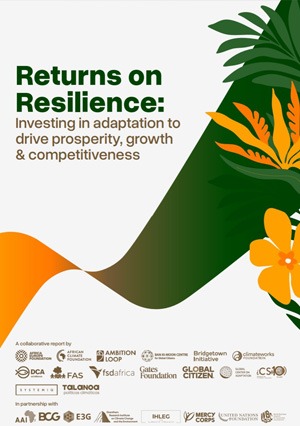
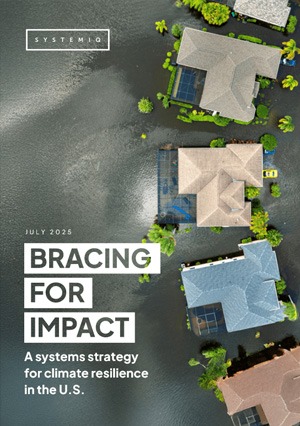
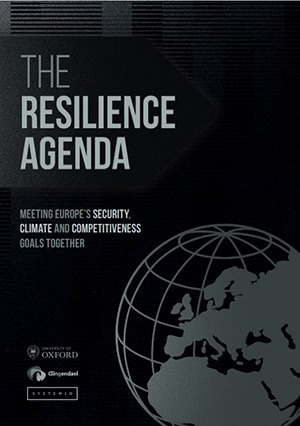
Our recent work on Resilience
Sources
- $1.2 trillion projected annual impact: Linda-Eling Lee et al., The Hidden Adaptation Economy: A New View of Corporate Resilience and Opportunity (MSCI, 2026)
- 1.7x higher total returns: First Street, The New Cost of Doing Business: How Climate Risk Impacts Operations, Earnings, and Enterprise Value (First Street, 2026)
- 42% with a dedicated adaptation plan: S&P Global, Mercury Rising: European Entities Show Some Adaptation Gains as Physical Risks Mount (S&P Global, 2026)
- 25% of adaptation measures strategic in nature: Marsh, Climate Adaptation 2025 Report (Marsh, 2025)

