
Achieving a large-scale industrial revolution
In recent years, the Circular Economy concept has found its way into mainstream policy and regulation, as well as the media. The concept, which in its various interpretations seeks to achieve a sustainable and efficient use of resources in the economy, is taken up by governments around the globe as a new model of sustainable economic growth.
While there is momentum around the concept, a transition to a new economic system faces many challenges and will not happen overnight. It will require different regulation and new
business models to ultimately foster new consumption and production patterns, and a new
industrial landscape.
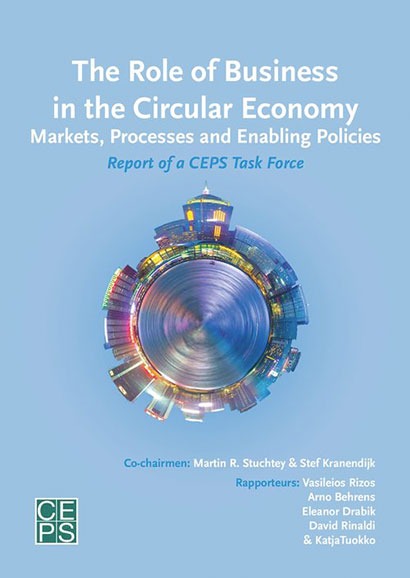
The Role of Business in the Circular Economy
In the EU, the European Commission’s Circular Economy Package of December 2015 is a first step. Achieving a large-scale industrial transformation, as envisaged by the EU, will require continuous support and a mix of well-designed policy interventions to remove barriers to circularity, make circularity profitable and thereby provide the ground for new business models and business innovation.
Key findings
The report starts from the priorities set in the EU Circular Economy Package but goes beyond and identifies key areas that can trigger the necessary changes in the coming years. It analyses a number of policy areas according to their actual and potential impact on circularity and identifies ways forward.
About CEPS
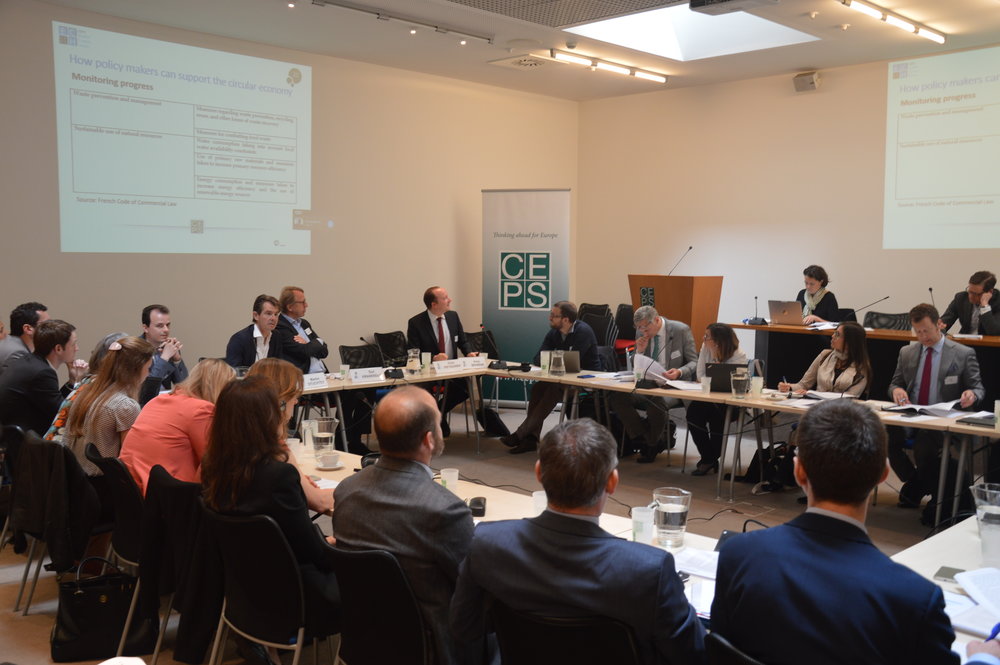
Against this background, CEPS brought together executives from major multinational companies as well as representatives of business associations, non-governmental organisations and research institutes to form a Task Force charged with tackling the immense challenges associated with the circular economy.
This report is the outcome of their deliberations, guided by the co-chairmanship of Martin Stuchtey, Founder and Managing Partner of SYSTEMIQ Ltd and Stef Kranendijk, Affiliate Partner of SYSTEMIQ Ltd. It analyses the key obstacles that need to be addressed, explores numerous policy areas at the EU and national level where support can act as a catalyst for market transformation, and puts forward actionable policy recommendations.
(c) CEPS