
Plastic pollution on track to double by 2040 but solutions for 83% cut exist
A major new report released today by The Pew Charitable Trusts, with support from Systemiq and other leading institutions, reveals that plastic pollution is worsening at a faster pace than previously understood, with far-reaching consequences for the environment and human health. But it also shows that existing solutions can dramatically reduce these harms if ambitious, systemic change is rapidly enacted across the global plastics economy.
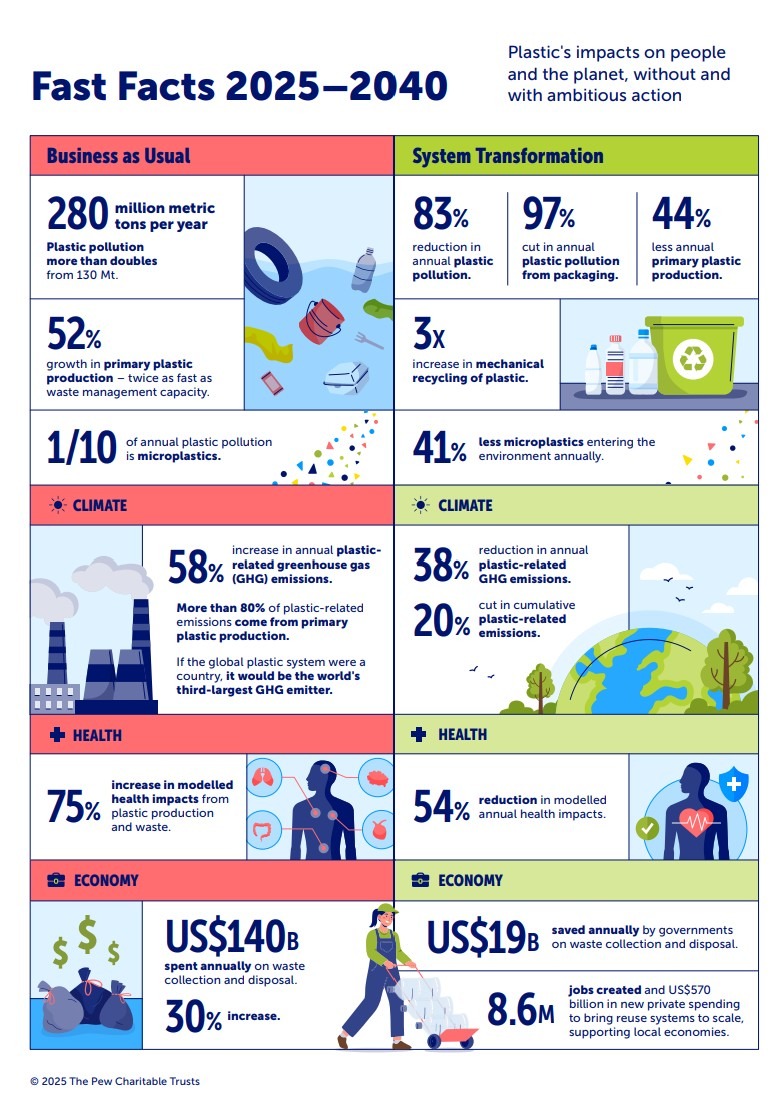
“Breaking the Plastic Wave 2025: An Assessment of the Global System and Strategies for Transformative Change” projects that plastic pollution could jump from 130 million to 280 million metric tonnes by 2040, driven by production growth that far outstrips improvements in waste management. If the global plastics system were a country, it would be the third-largest greenhouse gas emitter by 2040. Without intervention, plastic-related emissions could rise by 58%, health impacts could grow by 75%, and microplastic pollution could increase by more than 50% – becoming the dominant source of pollution in high-income economies.
A clear pathway forward
Despite this alarming trajectory, the analysis highlights that existing solutions can cut plastic pollution by 83% by 2040. These include reducing unnecessary plastic production, designing materials and systems for reuse, and investing in high-performing waste management and recycling.
If implemented globally at scale and pace, these measures could:
- Nearly eliminate pollution from packaging, one of the leading sources
- Reduce plastic-related greenhouse gas emissions by 38%
- Cut health impacts from plastic production and waste by 54%
- Save governments US$19 billion annually in collection and disposal
- Create 8.6 million jobs, many in emerging markets.
Existing solutions could also reduce microplastic pollution by 41%, though innovative strategies will be needed to tackle the remainder of this particularly challenging problem.
Achieving these outcomes will require unprecedented global collaboration. Policymakers and companies will need to implement and rapidly scale policies that reduce plastic production, improve product and system design, provide better waste management and increase transparency.
The report is clear: without this combined action, progress will fall short – and delay is costly. A five-year wait would add 540 million tonnes of plastic to the environment and significantly increase public spending, while locking in outdated systems.
Partner perspectives
About the report
“Breaking the Plastic Wave 2025” builds on the original 2020 global assessment developed by The Pew Charitable Trusts and Systemiq, incorporating new modelling and deeper analysis of health impacts, microplastics and economic implications. The research was produced by Pew with support from ICF International and four thought partners: the Ellen MacArthur Foundation, Imperial College London, Systemiq and the University of Oxford.

