

Invisible
Ingredients
ABOUT
Invisible Ingredients provides the most comprehensive global assessment to date of how four major chemical groups—phthalates, bisphenols, pesticides, and PFAS—affect human health, ecosystems, and economic stability through the global food system. It finds that without a timely and coordinated phase-out, these chemicals will continue to drive significant harm to health and fertility, damage ecosystems, and erode long-term economic resilience.
Moving from diagnosis to action, the report offers clear, evidence-based recommendations to drastically reduce chemical exposures and move towards a safer chemical economy.
Download the full report, get a top level overview with the ’10-Minute Takeaway’ or scroll down for the key insights.

KEY FINDINGS
Four groups of toxic chemicals pose a hidden threat to global health, economies, and ecosystems
Phthalates, bisphenols, pesticides and PFAS
are imposing up to $3 trillion a year in preventable costs

$
1.4-2.2TAnnually in healthcare costs
$
0.6TAnnual ecological damage (partial)
3-4
%
of global GDP in total avoidable costs
-70
%
Reduction in annual costs possible through available solutions
Toxic chemicals are ubiquitous in the food system and beyond
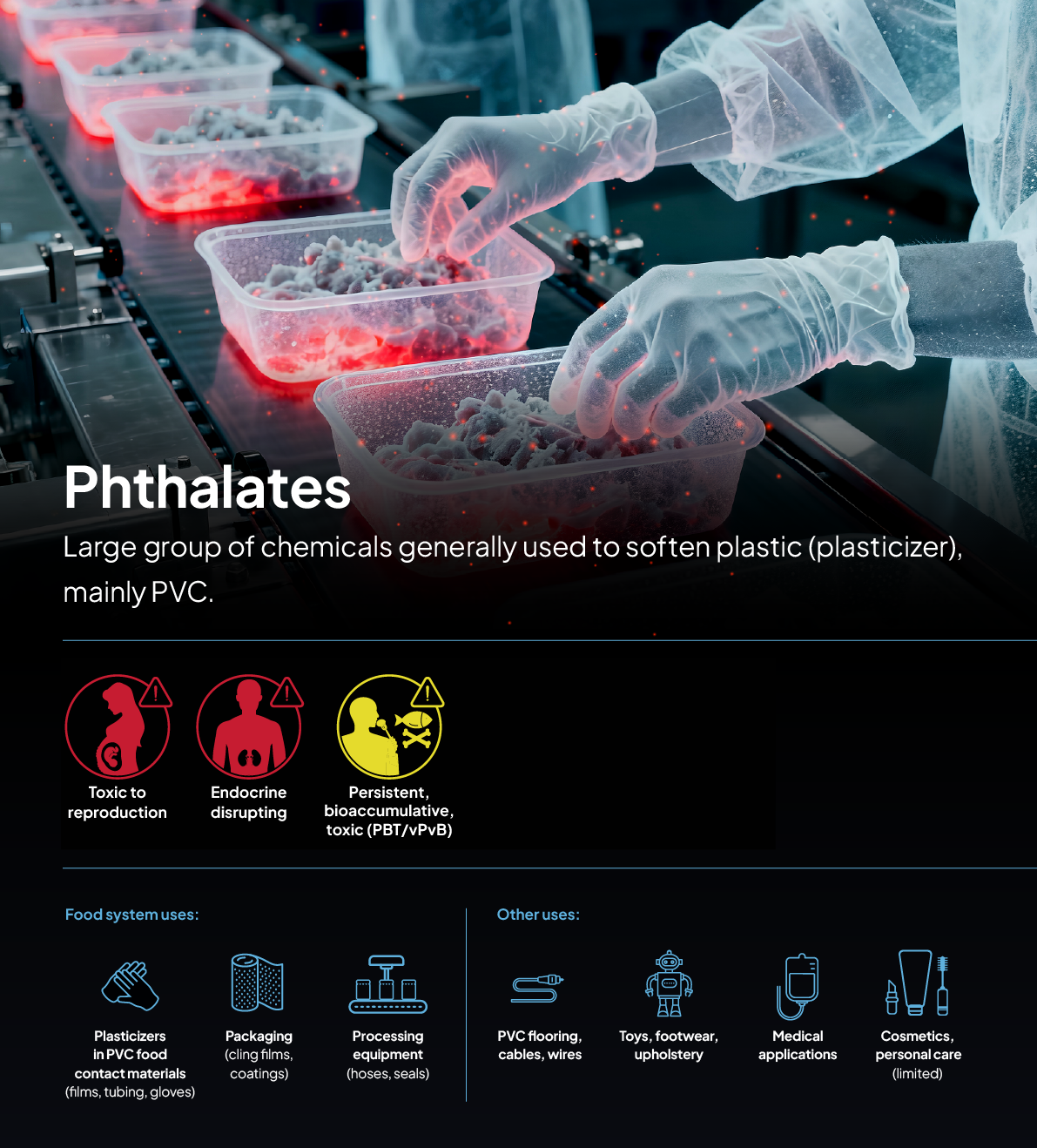
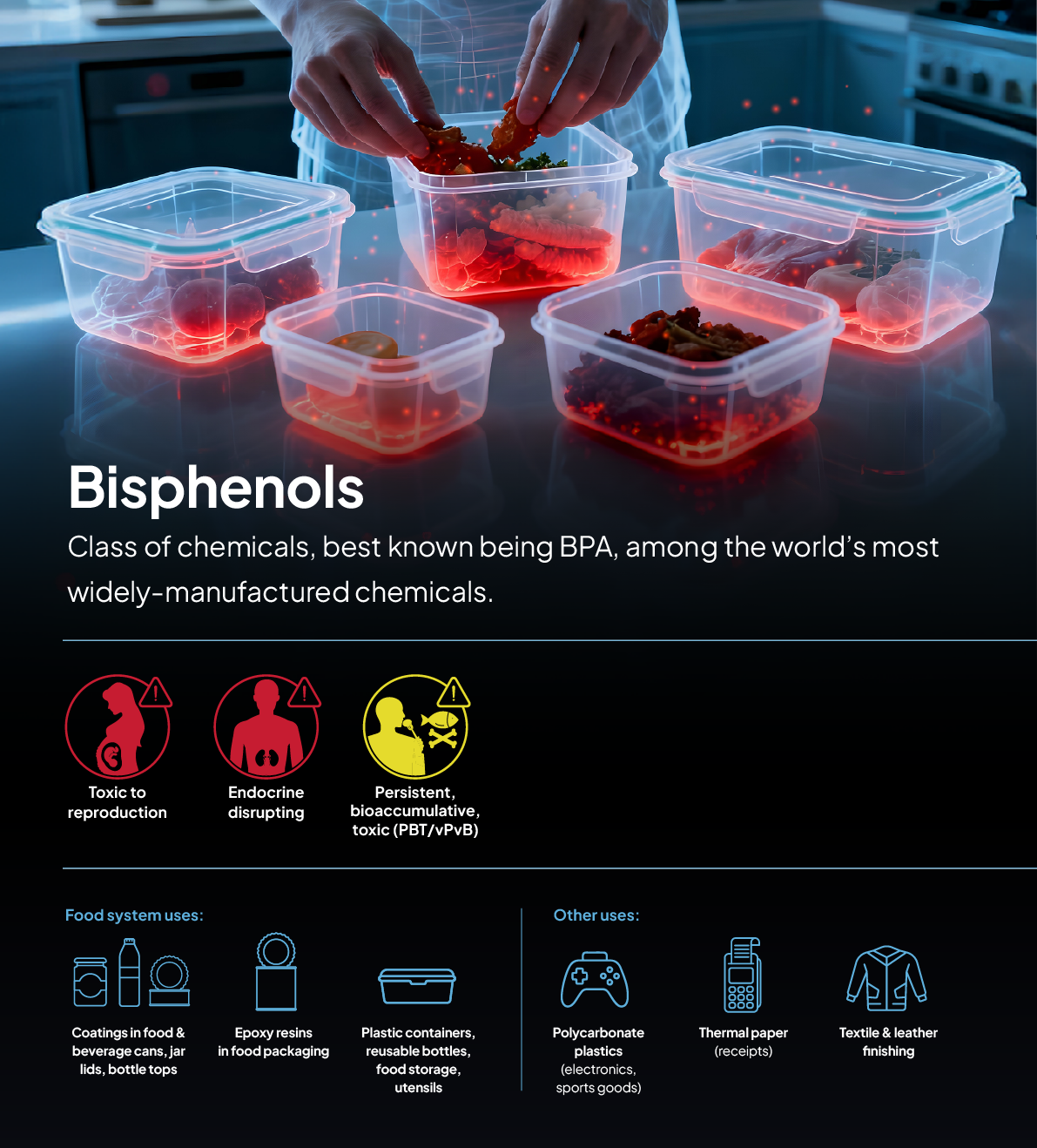
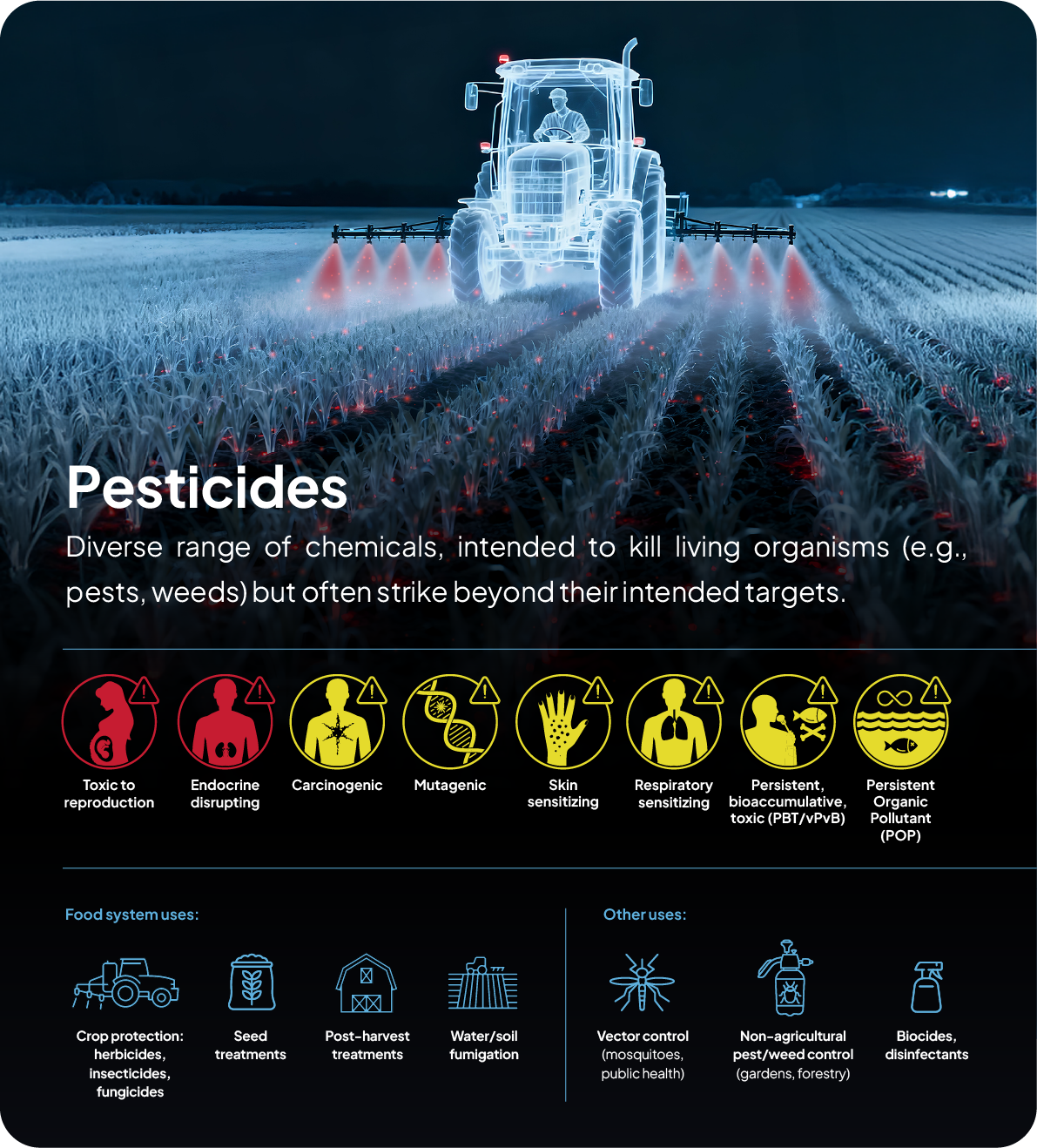
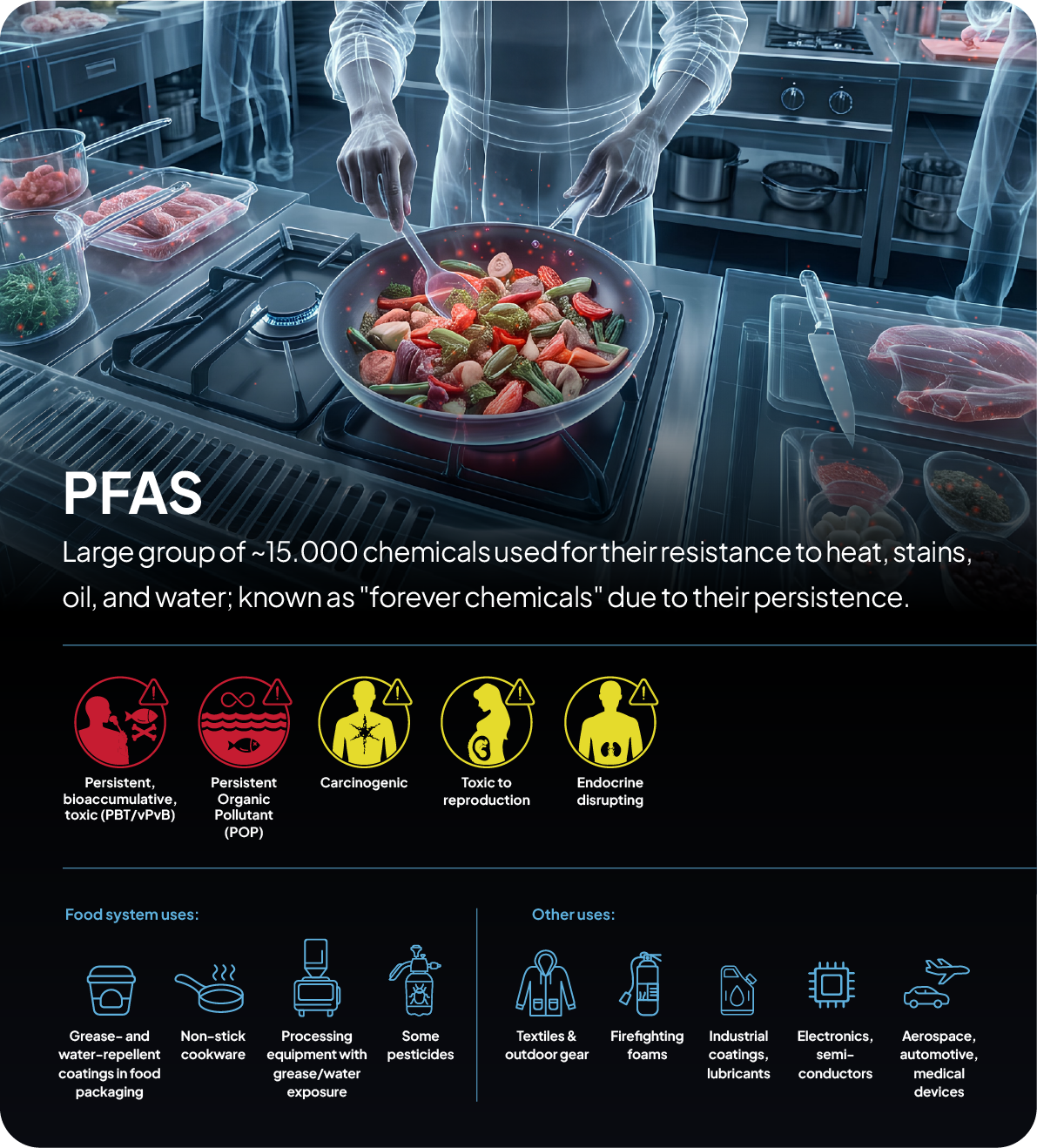
Each substance reflects a distinct dimension of the challenge: phthalates and bisphenols reveal both the power and the limitations of targeted regulation; pesticides show how dependency is reinforced by incentives in agricultural systems; and PFAS illustrate the cost of inaction on highly persistent pollutants.
Together, they also capture the two sides of the problem: unmanaged hazards and unknown safety.
 Strong evidence of hazard for subset of group, or entire group
  Evidence of hazard for subset of group, or suspected widely
HUMAN HEALTH IMPACTS
The harms caused by toxic chemicals are too great to ignore
They cut across multiple dimensions, with the largest burdens arising from developmental disorders, all-cause premature mortality, metabolic diseases, and circulatory diseases. Together, these exposures affect multiple organs and biological pathways, creating systemic and unavoidable health burdens.
Total estimated health costs of four major toxic chemical groups exceed
the combined annual profits of the world’s 100 largest publicly listed companies


ECOLOGICAL IMPACT
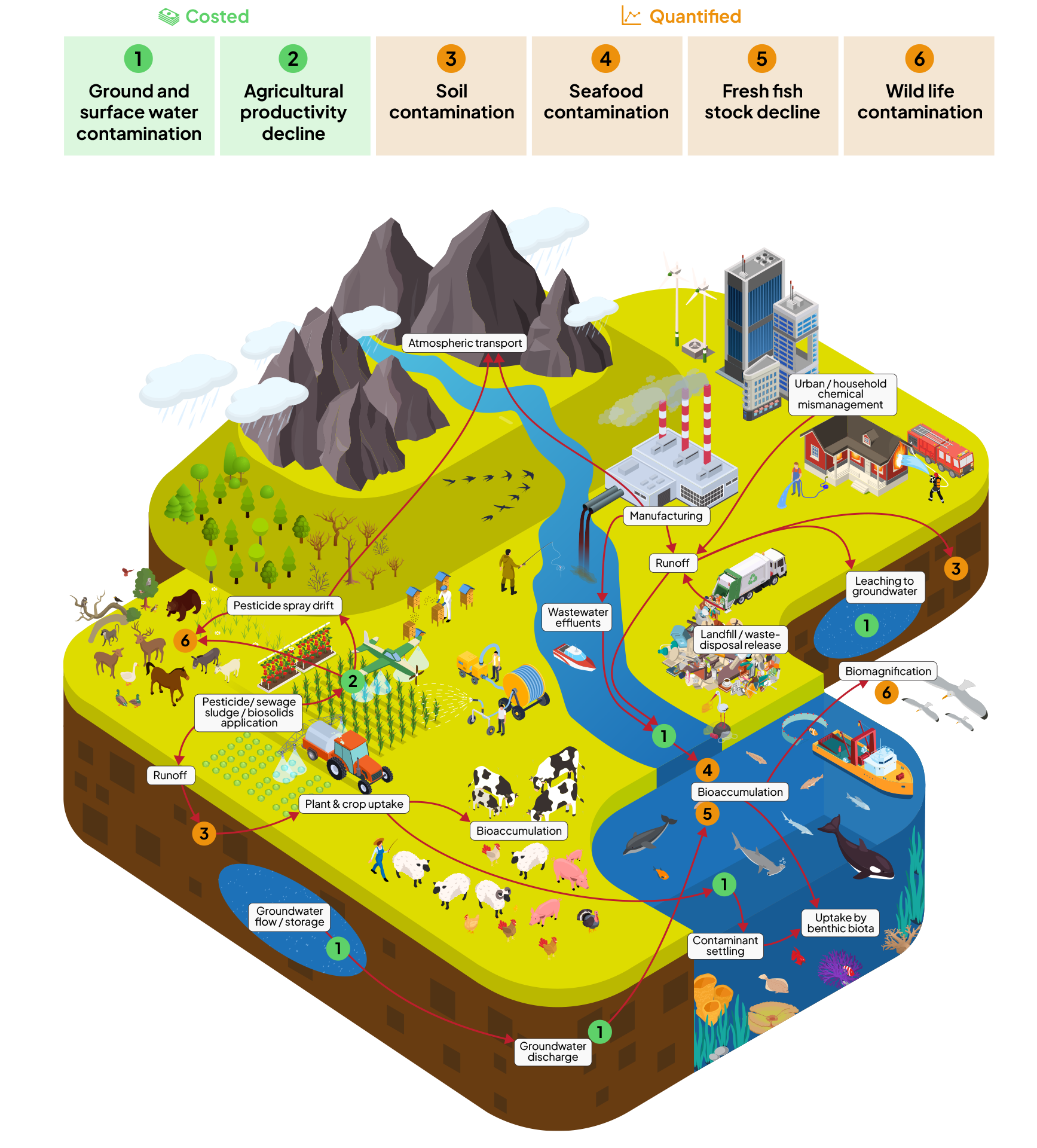
These chemicals enter the food system at every step
Toxic chemicals have permeated our ecosystems, including soil, water, air, and living organisms. Persistent substances such as PFAS are dispersed through the air, rain, rivers, and groundwater, accumulating in food webs and defying cleanup at any meaningful scale.
Ecological damage from toxic chemicals is both vast and compounding. Drastically reducing their use is the only viable option. This would not only curb human exposure but also restore ecosystems that provide the irreplaceable services—from pollination to water purification—that are essential to long-term food system resilience.
The evidence is clear: doing nothing is the most expensive option.
FERTILITY IMPACTS
Toxic chemicals are a crucial but under-valued driver of dwindling fertility rates
Food-linked toxic chemicals affect fertility in both men and women. The report finds no region is spared, and exposure often begins before birth, shaping lifelong health risks. Continued exposure could contribute to large-scale fertility disruption over time — with major implications for future generations.
A high-level assessment conducted for this report—combining projected fertility rates, exposure levels, and scientific estimates of toxic chemical-driven fertility impacts —reveals that the demographic implications of exposure could be stark: toxic chemicals could result in 200–700 million fewer births globally between 2025 and 2100 (under a current-exposure scenario).


THE GOOD NEWS
Phaseout is both possible and potentially profitable
Reducing toxic chemicals in the food system is both possible and cost effective. Past regulatory action has shown that when governments set clear rules, industries adapt rapidly—often at lower costs than anticipated.
Existing policies and technologies could reduce combined harms by ~70%, delivering up to $1.9 trillion in annual global savings. The costs of action are small compared to the damage avoided.
-70
%
Reduction in annual costs possible through available solutions
$
1.9BPotential annual saving
(around 3% of global GDP)
The evidence is clear: across the four groups of toxic chemicals, the benefits of action vastly outweigh the costs of acting
PESTICIDES EXAMPLE Reducing pesticide dependence would deliver benefits well beyond avoided harms. A decline in cancers, metabolic diseases, and neurodevelopmental disorders will alleviate human health burdens. Ecological resilience will strengthen as pollinators and natural pest predators recover, reducing long-term pest pressure. Soil health will improve, enhancing carbon sequestration and delivering climate and biodiversity co-benefits through regenerative practices.
Pesticide reduction in the EU delivers a huge benefit-cost ratio


Estimated health and ecological benefits from toxic chemical reduction globally
Looking at specific examples paints a picture of the relative order of magnitude. The costs of phasing out 42% of PFAS volumes in the EU in 2030 are estimated at $500 million per year, while annual health impacts of PFAS in the region stand at $46-83 billion. That means the costs of phaseout amount to between 0.5–1% of the health impacts.

RECOMMENDATIONS
The good news is that the path forward is clear
Achieving drastic reductions in toxic exposure across our food system and beyond requires more than incremental measures. The challenge is twofold. On the one hand are unmanaged hazards: substances whose health and environmental harms are already well documented, but where action lags behind the available evidence. On the other hand are unknown hazards: the thousands of substances in circulation that have not been adequately assessed for safety.
Traffic light for safer chemicals in the food system
Three essential levers to reduce toxic exposure and build a safe-by-design future.
STOP using toxic chemicals we already know are harmful
ELIMINATE UNMANAGED HAZARDS
Ban and phase out highly hazardous chemical groups with clear deadlines
Strengthen enforcement through biomonitoring, food & water testing, and supply chain transparency
Strengthen liability frameworks so producers are incentivized to identify and phase out hazards
Prohibit production and exports of chemicals restricted domestically
PREVENT toxic chemicals reaching people and ecosystems
CLOSE THE SAFETY GAP ON UNKNOWN HAZARDS
Adopt precautionary, hazard-based regulation
Require pre-market proof of safety based on independent scientific assessment (“no data, no market” principle)
Monitor unforeseen harms through post-market surveillance
Apply systematic review methods to weigh all scientific evidence transparently
REALIGN incentives and redesign systems
TRANSFORM TO A SAFER, MORE INNOVATIVE CHEMICAL ECONOMY
Reform fiscal and regulatory incentives to reward lower toxicity
Fund time-bound innovation missions to accelerate solutions in hard-to-replace uses or critical exposure pathways
Drive product & system redesign to eliminate unnecessary chemical use
Embed hazard literacy and safe-by-design principles in STEM education and industry training
When governments and industry act across all three levers, toxic exposure can fall dramatically —
improving health, fertility, and ecosystem resilience

Further reading


