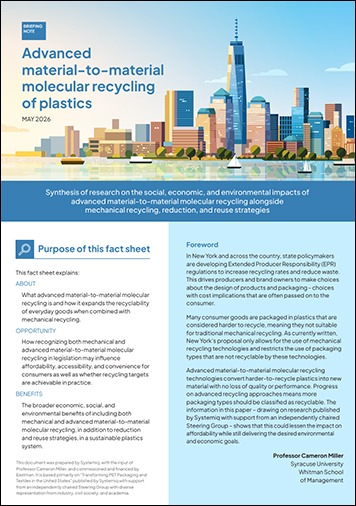
This briefing note, prepared as New York State considers passing EPR legislation, shares a synthesis of research on the social, economic, and environmental impacts of developing and scaling advanced material-to-material molecular recycling alongside mechanical recycling, reduction, and reuse strategies. It includes:
- What advanced material-to-material molecular recycling is and how it expands the recyclability of everyday goods when combined with mechanical recycling.
- How recognising both mechanical and advanced material-to-material molecular recycling in legislation may influence affordability, accessibility, and convenience for consumers as well as whether recycling targets are achievable in practice.
- The broader economic, social, and environmental benefits of including both mechanical and advanced material-to-material molecular recycling, in addition to reduction and reuse strategies, in a sustainable plastics system.
The information in this paper draws on research published by Systemiq, specifically “Transforming PET Packaging and Textiles in the United States,” and shows that encouraging the development of both mechanical and advanced material-to-material molecular recycling technologies could lessen impacts on affordability while delivering positive environmental and economic outcomes.