
Unleashing the potential of digitally- and AI-enabled power systems
The clean energy transition and the AI revolution are unfolding at the same time. As renewable electricity, particularly solar, scales rapidly, power systems must manage growing demand, increasingly distributed energy resources and greater variability.
Developed in partnership with the International Solar Alliance, this report explores how digitally- and AI-enabled power systems can help unlock the clean energy transition and create electricity systems that are more accessible, affordable, reliable and secure. It sets out technology pathways for different country contexts, presents case studies of already deployed technologies and their demonstrated impact, and calls for collective action to unlock the potential of digitally- and AI-enabled power systems.
The challenge: grids are the crucial link of the energy revolution
Renewable energy is scaling at unprecedented speed, driven in particular by the rapid growth and falling cost of solar. But electricity grids are becoming a binding constraint on realising this potential.
Power systems designed around centralised, dispatchable generation and one-way electricity flows must evolve into dynamic networks able to manage rising electricity demand, distributed generation and storage, variable supply and demand, and active “prosumers”. At the same time, grids must become more resilient to climate, cybersecurity, geopolitical and supply-chain risks.
Modernising power systems is therefore critical to providing electricity that is accessible, affordable, reliable, secure and clean.

The opportunity: digitally- and AI-enabled power systems
Digitalisation and AI can help power systems manage this growing complexity. The report identifies six technical capabilities: plan, monitor, forecast, optimise, flex, and build trust and transparency.
Together, these capabilities can provide greater visibility across the power system, improve forecasting and planning, optimise the use of generation, grids and storage, and unlock opportunities for demand-side flexibility.
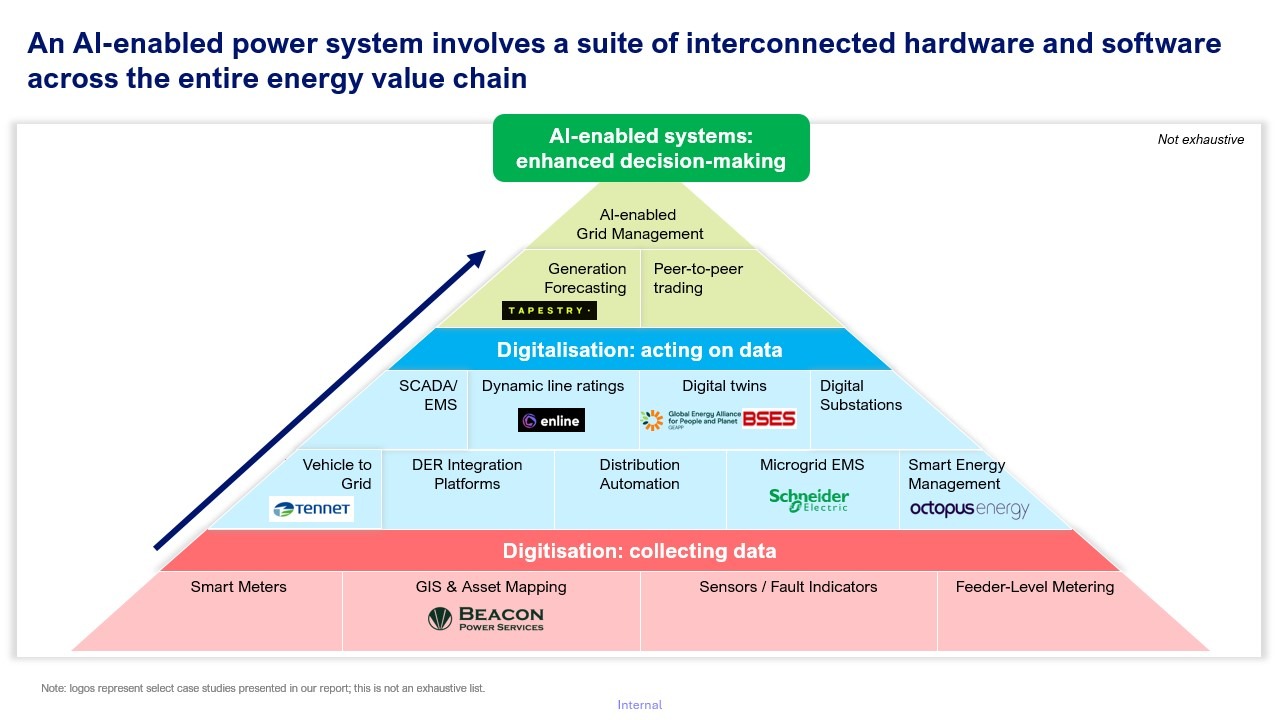
But there is no single technology that creates an AI-enabled power system. Countries cannot skip the foundational stages of digitalisation. They must progress step by step along the “digitalisation ladder”, from digitising their systems to collect data, to deploying digital technologies that act on data, and ultimately using AI to enhance decision-making.
Putting citizens at the centre
At the heart of an AI-enabled clean power system is the prosumer. Households and businesses are no longer only passive consumers of electricity: they can generate electricity, store surplus power and flex their demand.
A citizen-centric approach requires the infrastructure and data-sharing frameworks that enable participation, the digital literacy needed for people to understand and manage their energy use, and incentives that allow them to share in the rewards of an AI-enabled clean power system.
This can give citizens greater control over their electricity consumption and production, while supporting the wider operation of a clean, distributed power system.

What AI-enabled power systems can unlock
Digitally- and AI-enabled power systems can support more efficient operation of the electricity system and faster integration of renewable energy. The report identifies opportunities to reduce losses, outages and curtailment, improve the use of renewable generation and storage, and make better use of existing grid infrastructure.
These improvements can support wider economic transformation, social inclusion and energy security by improving the accessibility and reliability of electricity and reducing the overall cost of building clean power systems.
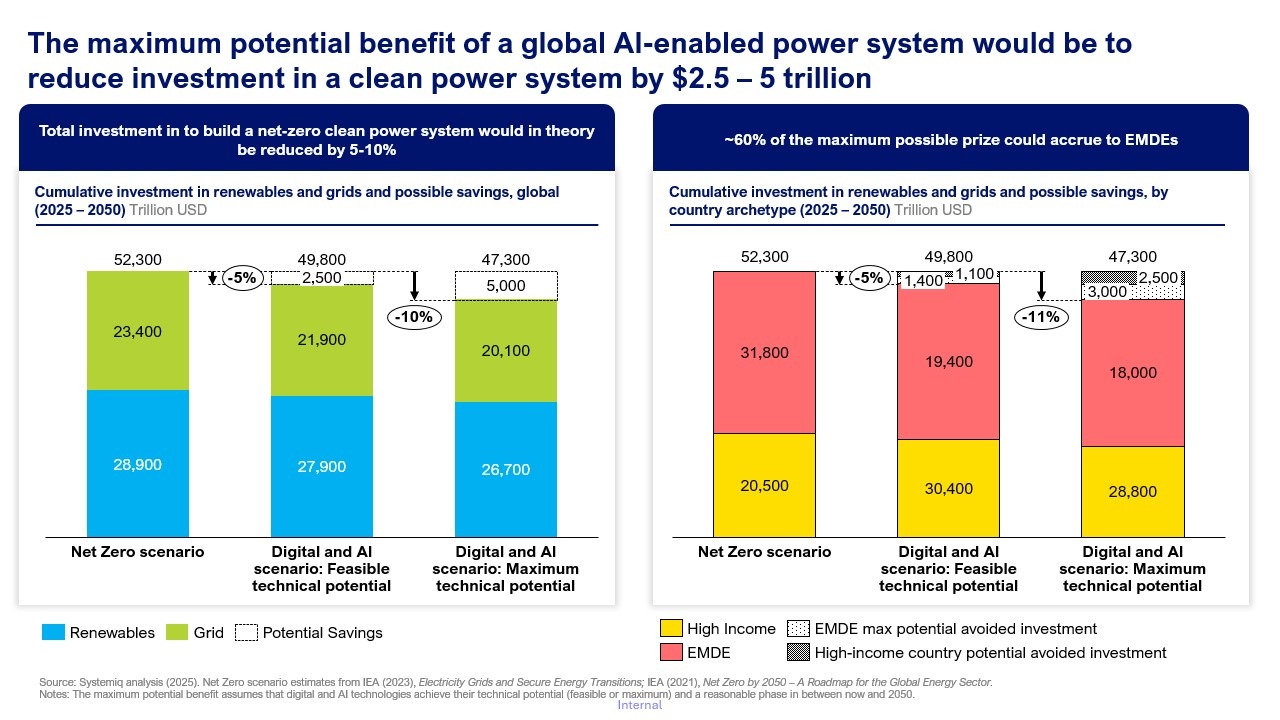
The report estimates that, if digital and AI technologies achieve their technical potential and are phased in over the coming decades, the maximum potential benefit could reduce cumulative investment requirements, under a Net Zero scenario, for renewables and grids by 5–10%, equivalent to approximately $2.5–5 trillion. Around 60% of this maximum potential benefit could accrue to middle- and low-income countries.
Different power systems need different pathways
There is no one-size-fits-all pathway towards an AI-enabled power system. Countries start from different levels of digital maturity and face different power-system priorities.
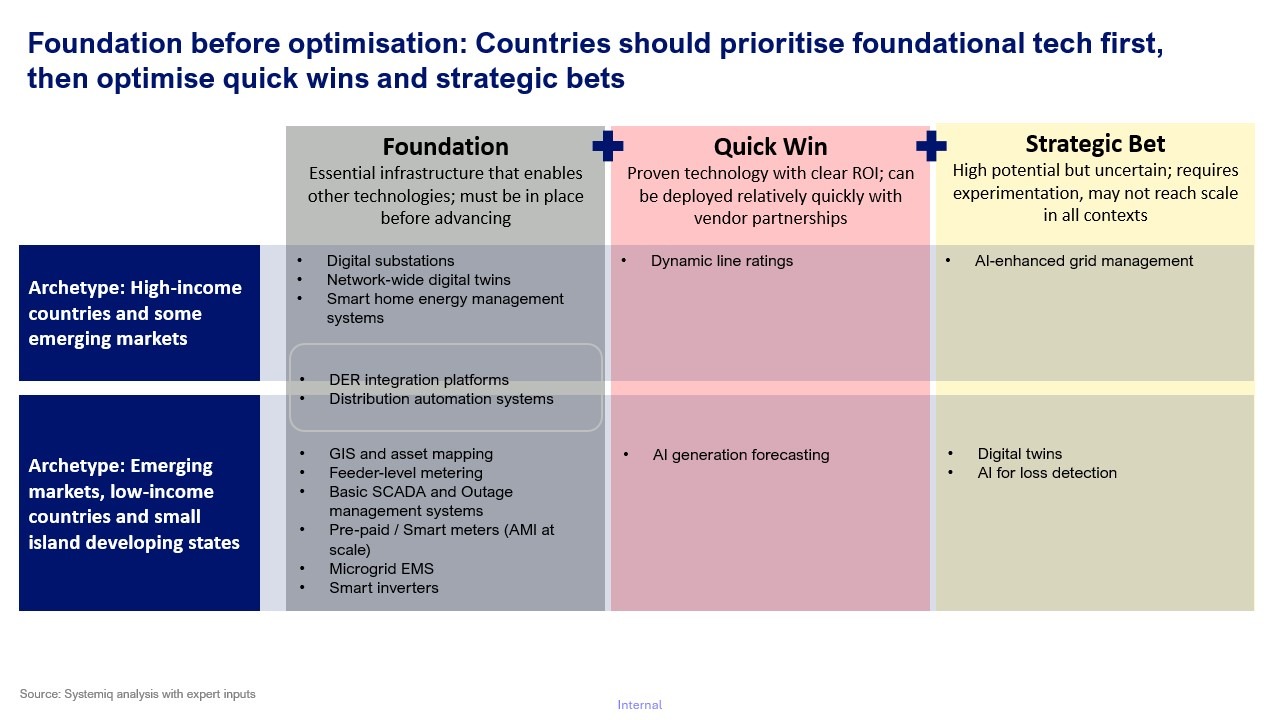
The report therefore recommends a foundation-before-optimisation approach:
- High-income countries can increasingly focus on optimising complex power systems through advanced grid management, demand-side flexibility, analytics and forecasting.
- Emerging markets need to digitise and digitalise distribution networks and end-use, while building the capabilities and systems needed to digitally enhance power-system operations.
- Low-income countries need to build a foundational understanding of their networks, address technical and commercial losses and improve the financial health of utilities.
- Small Island Developing States need core software and data platforms to support microgrids alongside targeted investments that address specific system challenges.
Across all contexts, progress depends on sequencing investment according to local needs and building the foundations required for more advanced applications.
Collective action is needed to drive AI for power systems
Technology pathways alone will not unlock the full potential of digitally- and AI-enabled power systems. The report identifies barriers across five interconnected areas:
Policy and regulation
Creating policy and market frameworks that support digital investment, flexibility and participation.
Capability building
Developing the digital and AI skills required across power systems and society.
Data infrastructure and governance
Building the data foundations, architecture and governance needed for secure, interoperable power systems.
Innovation and ecosystem creation
Creating mechanisms that enable promising solutions to move from pilots to scale.
Finance and de-risking
Mobilising accessible finance and reducing the risks associated with early deployment.
The report proposes collective action for AI for Energy to coordinate action across these five pillars. Collective action would seek to harness the power of AI to make energy clean, citizen-centric and more accessible, affordable and reliable.
For more information, contact Peter Hulshof or Hannah Audino.

